
- Readers
- Avg. rating
- 4.5

When Bataille Attacked the Metaphysical Principle of Economy1987
Another excellent paper. Here, Jean Baudrillard reviews vol. VII of Georges Bataille's Ouvres Complètes. Behind the notion of continuity, sovereignty, intimacy, and immanent immensity11All Bataille's terms, which we can think of as the inverse of methodological individualism, anything that is not separate agents with separate utility functions. sits a single mythic thought, that which leads to things beyond, or rather, opposed to the incessant growth of production. In this review, Baudrillard shows were he breaks with Bataille. Thus, this anti-agent without an objective function can be characterized as mythic, as non-scientific. This brings us to the concept of sacred, that which cannot be used, or sold. A temple, a sacrificial victim. Sacrifice is how something becomes sacred22Spence (1973) rationalizes this as costly signaling. But Bataille rejects the framework all-together and denied that there is a payoff to be had., we remove the utility from the animal, the human victims. And so, in Bataille's work, a concept most central that arises is the fundamental principle. B calls it the solar principle of expenditure. This means that much like the Sun, humans have extra energy that must be spent. Bataille's thought goes to the metaphysical principle of economy. And so, while Marx attacks price and profit, Bataille attacks utility, that is, the notion that things must have an use at all33It is metaphysical because it is was never discovered form data, it is pure belief, preceding any evidence or theory. For economics the problem lies with scarcity, while for Bataille the basic human condition is excess.. While utility is apparently positive (saving, investing), it is in fact, on Bataille's account, a powerlessness, something bad, a weakness, since it means we can no longer spend as done in Antiquity. The sacrifice, festivals, the Potlatch, I forget the name of the Roman one. Which is why economics is entirely residual, as it deals entirely with what can't be sacrificial.
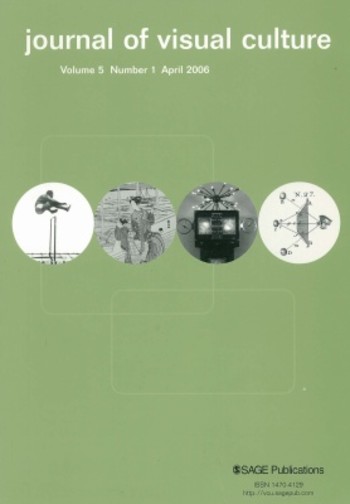
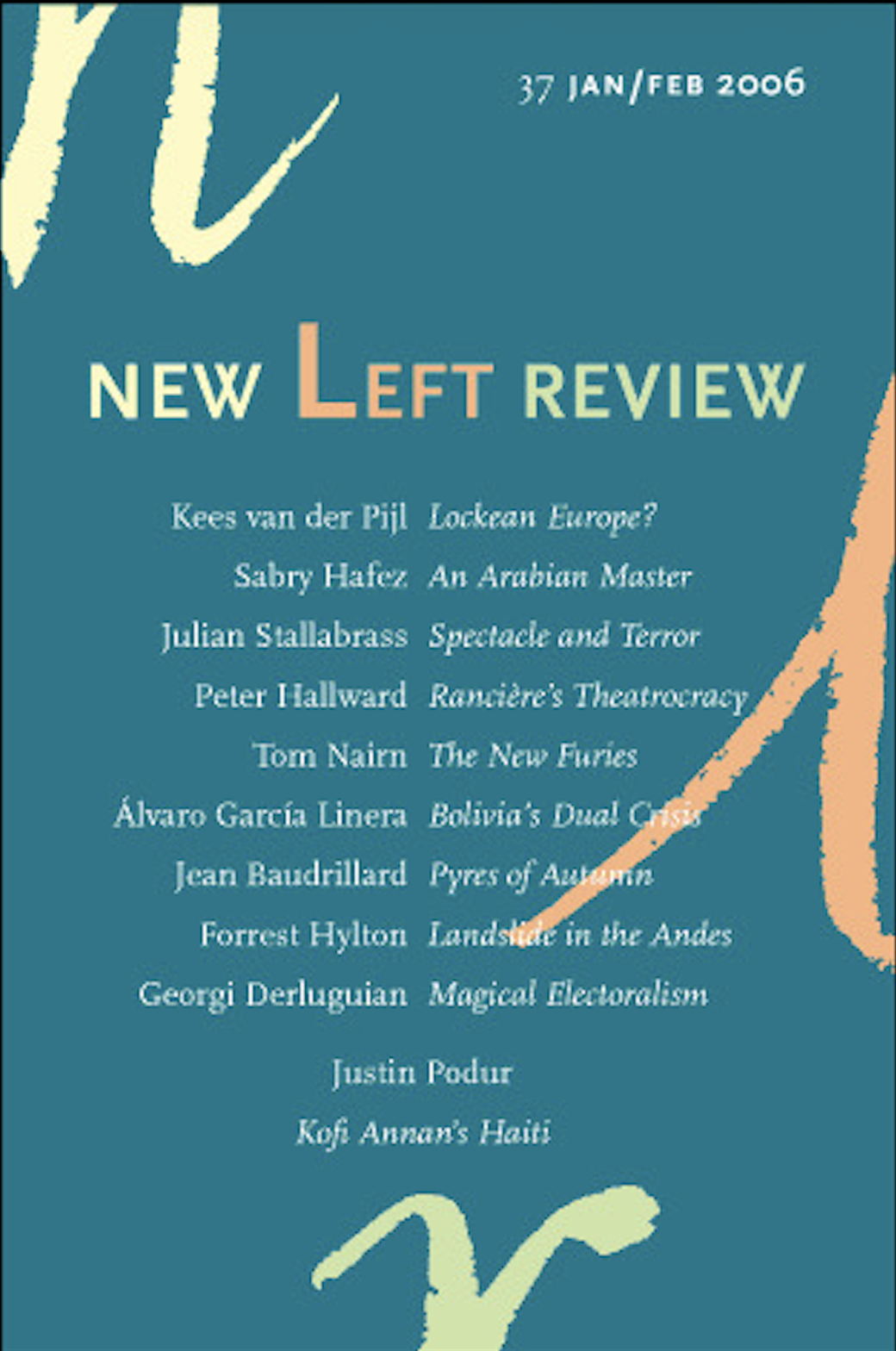
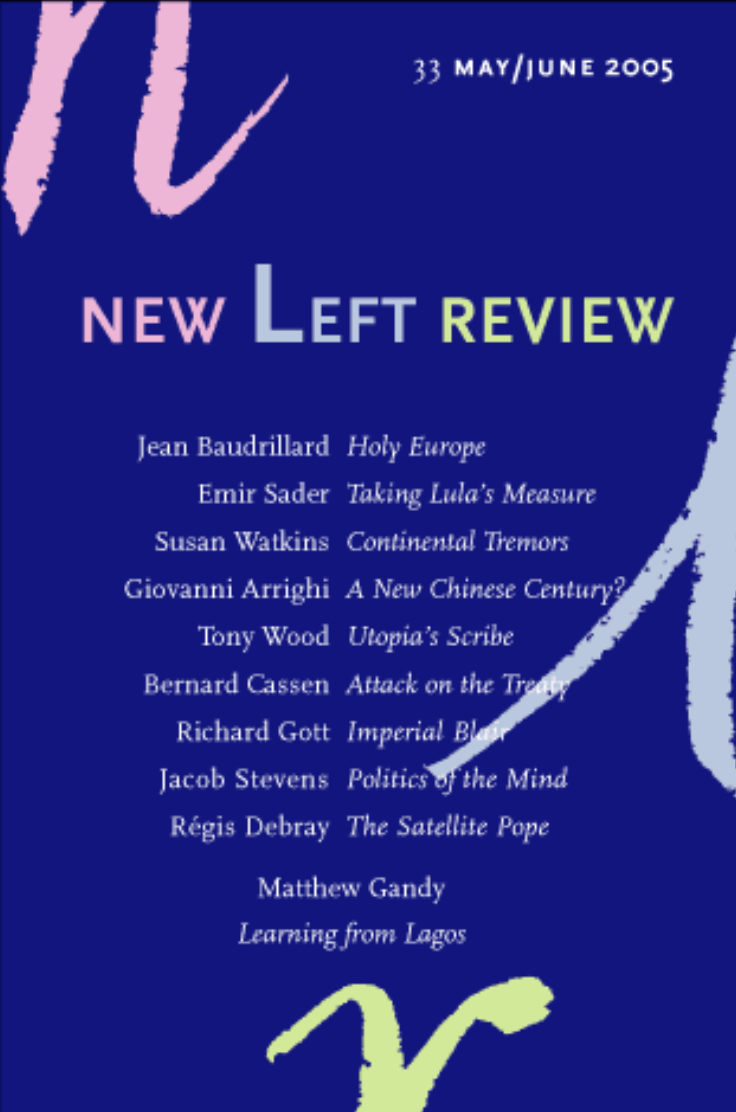
Both B and B stand opposed to Marx, who defined the capitalist class as those who exploit workers, given history and class struggle. But for Bataille, since the capitalist can't spend (expend) in this sacrificial definition, it reinvests ad nauseam and gives over to the cancer of production and unlimited reproduction. We can see that Marx appreciates use-value, indeed, in a communist society things are used properly. In consequence, B calls Marxism a middle-class critique. Here we can understand why so many welfarists, liberals, leftists in Europe and America dream of the utopy of perfect competition, of equal opportunity. In contraposition, Bataille's critique is aristocratic. Marx speaks to the slave, and Bataille to the master (Hegel).
We then move on to Baudrillard properly criticizing Bataille. We can thing of two models of surplus. In one, it is exogenous, received by nature, and society must dispose of it. In the other, the surplus is an endogenous consequence of a two-player game, one in which a gift stands in the middle i.e symbolic exchange. That is, the excess comes from out-bidding one another. And so, everything Bataille builds is based on the notion that the solar economy has no reciprocal exchange. Baudrillard claims Bataille has misread Mauss. There is no one-way gift. I suppose this is similar to my criticism of the model in Buchmann et al. (2026). And even then, capital might be sacrificial after all. Bataille's concept of expenditure is too economic44I don't see how.. You might destroy market value but not the sign system55For example, a luxury brand burning inventory, which might make it worth more. See for example: https://www.bbc.com/news/business-44885983.. He reproaches Bataille for naturalizing Mauss, he has taken Mauss' gift and grounded it in physics, in nature. He escaped the metaphysical foundation of utility to end up in another, which involves nature and the Sun.
Comments
Sign in to comment.