- Readers
- Avg. rating
- 3.5

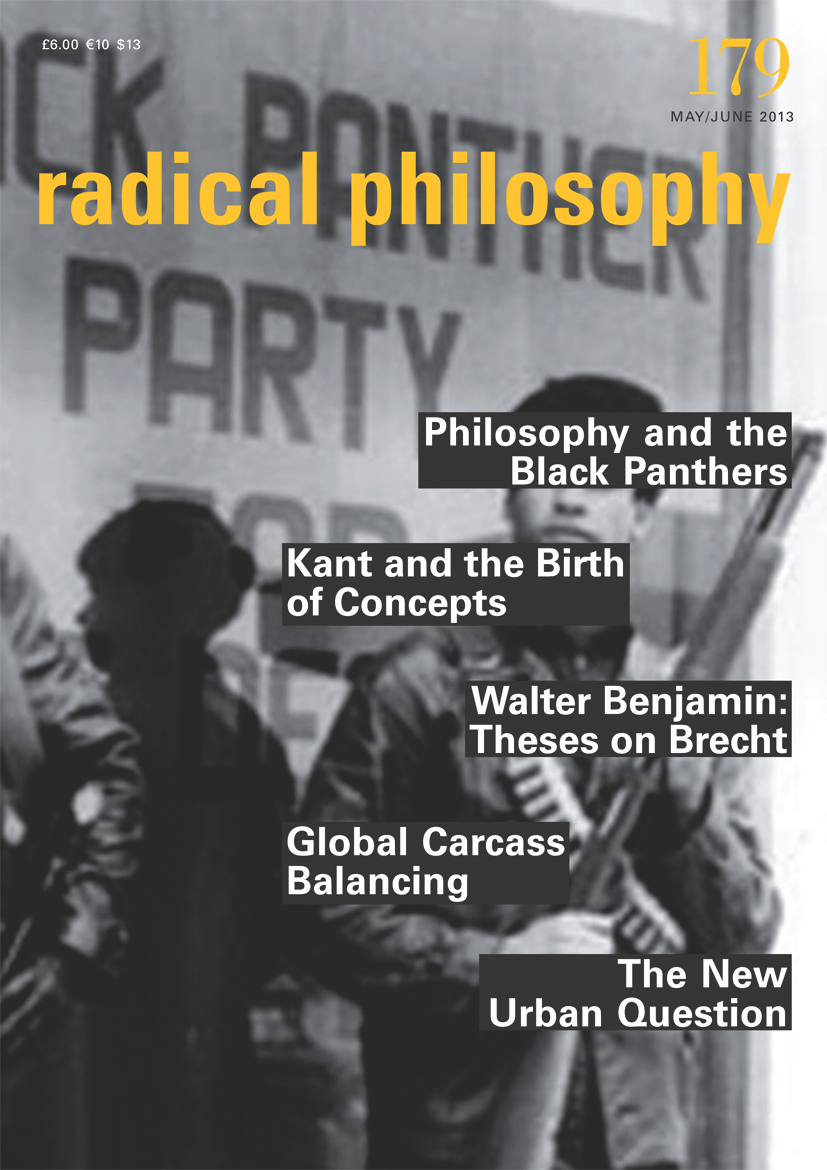
Philosophy and the Black Panthers2013
This is mostly about Huey P. Newton and his relationship with philosophy, in particular his theoretical contributions to the distinction between revolution and resistence. The revolutionary projeect thrives on the acceleation of time, while resistence involves a sustained and prolonged time span. It is the people who make revolution, and it is the oppressors who cause resistence. The objective of the enemy is to then dismantle the capacity to resist through installations of terror and spectacles of humilliation. The distinction can be traced to the schism between Kantian modal categories of possibility and actuality. One is the problem of realizing freedom and the other is the problem of forceful opposition.
It is the job of the vanguard party to provide leadership, and its responsibility is to provide strategic conduct for resistence. It was through COINTELPRO that the FBI was able to transform the Black Panthers from an organization that provded communal meals, healthcare, education, to a pantomime revolutionary enemy. It was during Neewton's imprisonment that the insurrectionary rhetoric of Eldridge Cleaver flourished. This tactical stratagem was critiqued by Newton, as well as Cleaver's homophobic views. Following Cleaver's departure, the Black Panthers returned to working on building capacity to resist. Cleaver, funniliy enough, became a conservative Republican later in his life.
There is a lot on Newton's relationship to Plato, his reading of Phaedo, his history with Republic as an educational tool in his youth. The article ends with a discussion on Nietzche and how Newton regognized that the will to power was the basic drive of man. The Black Panthers used the Genealogy of Morals as a strategic manual that helped them use words as revaluing instruments or compromising weapons. This is a good and rather short piece..
Comments
Sign in to comment.